Preparing for CLAT (Common Law Admission Test) 2027 is not just about covering the syllabus; it’s about building the right strategy, consistency, and exam temperament. With increasing competition and a passage-based pattern, aspirants must focus on smart learning, strong reading skills, and regular practice.
This complete guide covers everything you need for effective CLAT exam preparation, including section-wise strategies, study plans, best books, preparation tips, and common mistakes, helping you stay ahead in your CLAT journey.
Upcoming Exams
What Is CLAT Exam?
The Common Law Admission Test is a national-level entrance exam conducted for admission to undergraduate (UG) and postgraduate (PG) law programs at top National Law Universities (NLUs) in India.
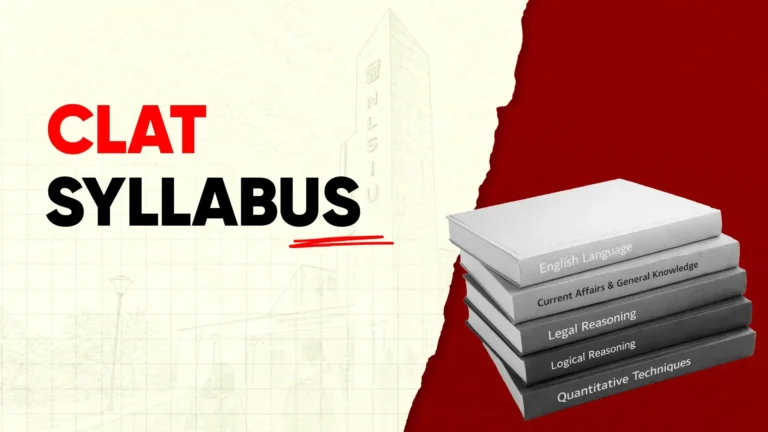
It is one of the most competitive law entrance exams, testing candidates in areas such as English, Legal Reasoning, Logical Reasoning, Current Affairs, and Quantitative Techniques. A well-planned approach to CLAT exam preparation is essential for cracking the exam and securing a seat in a reputed law college.
Start your CLAT preparation with expert-led Online CLAT Coaching today.
Why Is a Proper CLAT Preparation Strategy Important?
A well-structured CLAT preparation strategy plays a crucial role in helping aspirants succeed in this highly competitive exam. Here’s why it matters:
- Provides Clear Direction: A proper strategy helps you understand how to start preparing for CLAT and keeps your study plan focused and organised.
- Improves Time Management: With a defined plan, you can allocate time effectively to each subject, whether you’re preparing for CLAT in 1 month or over a longer period.
- Enhances Concept Clarity: A good strategy ensures you cover the right CLAT preparation material and focus on important topics for better understanding.
- Boosts Accuracy and Speed: Regular practice based on a strategy improves your performance and helps you apply CLAT exam preparation tips effectively.
- Helps Choose the Right Resources: It guides you in selecting the best CLAT UG preparation books and other study materials for efficient learning.
- Reduces Stress and Confusion: Knowing how to prepare for the CLAT examination step-by-step reduces anxiety and keeps you confident throughout your preparation.
- Tracks Progress Effectively: A structured approach helps you monitor your preparation level and adjust your CLAT preparation strategy when needed.
- Supports Different Preparation Timelines: Whether you’re planning to prepare for CLAT in 6 months or starting early, a strategy adapts to your timeline and goals.
CLAT Preparation 2027: Section-Wise Strategy
A smart and structured CLAT preparation strategy requires focusing on each section individually while maintaining overall consistency, accuracy, and time management throughout your CLAT exam preparation journey.
How to Prepare for English Language in CLAT
The English section plays a crucial role in improving your overall score, so a focused approach is essential for effective CLAT preparation.
- Build Strong Reading Habits: Read newspapers, editorials, and novels daily to improve comprehension skills. This is key to preparing for CLAT English.
- Enhance Vocabulary Regularly: Use books like Word Power Made Easy as part of your CLAT UG preparation books to strengthen vocabulary.
- Practice Reading Comprehension Passages: Focus on tone, inference, and main ideas to boost accuracy in the English section.
- Work on Grammar Basics: Revise grammar rules and practice error detection questions regularly.
- Solve Previous Year Papers & Mock Tests: This helps in understanding question patterns and applying CLAT exam preparation tips effectively.
How to Prepare for Current Affairs and GK for CLAT
Current Affairs is a scoring section and can significantly impact your rank if prepared consistently.
- Read Newspapers Daily: Follow The Hindu or Indian Express to stay updated for CLAT 2027 preparation.
- Make Short Notes: Maintain monthly CLAT notes for quick revision, especially useful during last-minute CLAT preparation in 1 month.
- Focus on Important Topics: Cover national & international events, legal developments, awards, and government schemes.
- Use Reliable CLAT Preparation Material: Monthly current affairs magazines and online resources are essential for structured learning.
- Revise Regularly: Frequent revision is key to retaining information and strengthening your CLAT preparation strategy.
How to Prepare for Legal Reasoning in CLAT
Legal Reasoning is one of the most important sections and requires both conceptual clarity and practice.
- Understand Legal Principles: Focus on legal concepts rather than rote learning for effective preparation for CLAT legal reasoning.
- Practice Passage-Based Questions: Learn to apply legal principles to factual situations.
- Improve Reading Speed: Since passages are lengthy, speed and comprehension are critical.
- Refer to Standard Books: Use trusted CLAT preparation best books like A.P. Bhardwaj for conceptual clarity.
- Take Regular Mock Tests: This improves accuracy and helps refine your CLAT preparation coaching approach.
How to Prepare for Logical Reasoning in CLAT
Logical Reasoning tests your analytical and critical thinking abilities, making it essential for scoring well.
- Practice Critical Reasoning Questions: Focus on assumptions, conclusions, arguments, and inference-based questions.
- Solve Daily Practice Sets: Consistent practice strengthens logical thinking for preparation for the CLAT exam.
- Analyse Mistakes: Review errors to understand weak areas and improve performance.
- Use Quality Study Material: Choose the right CLAT preparation material for structured practice.
- Attempt Sectional Tests Regularly: This enhances speed and accuracy, aligning with your CLAT preparation strategy.
How to Prepare for Quantitative Techniques in CLAT
Though many find this section challenging, it can be scored with the right approach.
- Focus on Basic Concepts: Strengthen fundamentals like percentages, ratios, and basic arithmetic for how to study for the CLAT 2027.
- Practice Data Interpretation Sets: Most questions are passage-based, so practice is crucial.
- Work on Speed and Accuracy: Time-bound practice is essential for better CLAT exam preparation.
- Revise Formulas Regularly: Keep a formula sheet handy for quick revision.
- Start Early and Stay Consistent: Whether preparing for the CLAT in 4 months or longer, consistency is key to mastering this section.
Download CLAT Sample Papers PDF 2026, 2025, 2024 & more
How to Start CLAT Preparation from Scratch?
Starting your CLAT preparation from scratch may feel challenging, but with the right approach, consistency, and clarity of goals, you can build a strong foundation for effective CLAT exam preparation.
- Understand the Exam Pattern & Syllabus: Begin by thoroughly understanding the CLAT exam pattern, sections, marking scheme, and important topics. This is the first step toward preparing for CLAT.
- Set Clear Goals and Create a Study Plan: Plan your preparation timeline based on whether you have 1 year, 6 months, or less. A structured timetable ensures consistent preparation for the CLAT exam.
- Start with Basic Concepts: Focus on building strong fundamentals in English, Legal Reasoning, Logical Reasoning, and Quantitative Techniques before moving to advanced practice.
- Choose the Right Study Material: Select trusted CLAT preparation books, and reliable preparation material to avoid confusion and save time.
- Develop a Daily Reading Habit: Reading newspapers and editorials improves comprehension, vocabulary, and knowledge of current affairs, which are key to overall CLAT exam preparation.
- Practice Regularly with Questions: Solve sectional questions, CLAT previous year papers, and topic-wise exercises to strengthen your concepts.
- Take Mock Tests Gradually: Start with sectional tests and move to full-length mocks to track your progress and improve performance.
- Consider CLAT Coaching Online (Optional): Joining a reputable CLAT preparation institute or opting for online CLAT coaching can provide expert guidance and a structured learning path.
CLAT Preparation Strategy for Beginners (Class 11 and 12)
Starting early in school gives you a significant advantage, allowing you to build a strong, effective CLAT preparation strategy over time.
- Build a Strong Foundation in Class 11: Focus on improving reading skills, vocabulary, and basic concepts to ease your CLAT preparation from class 12.
- Shift to Intensive Preparation in Class 12: Increase practice, start solving mocks, and focus on accuracy and speed.
- Develop Strong Reading and Analytical Skills: Regular reading enhances performance in English, Legal Reasoning, and Logical Reasoning.
- Follow a Consistent Study Routine: Studying daily for a few hours is more effective than irregular, long study sessions.
- Use Standard Books and Resources: Refer to the best CLAT preparation books and reliable study materials for structured learning.
- Stay Updated with Current Affairs: Daily newspaper reading and monthly compilations are essential for scoring well.
- Start Practising Mock Tests Early: Early exposure to mock tests helps you understand the exam pattern and build confidence.
Know the CLAT Eligibility Criteria
CLAT Study Plan 2027 (Daily, Weekly and Monthly Plan)
A well-structured study plan is crucial for maintaining consistency and ensuring complete syllabus coverage during your CLAT exam preparation.
Daily Plan
- Study 2–3 subjects daily with proper time division
- Practice reading comprehension and vocabulary
- Stay updated with current affairs
- Solve sectional questions and revise key topics
Weekly Plan
- Complete specific topic targets from each subject
- Attempt 1–2 full-length mock tests
- Analyse performance and identify weak areas
- Revise weekly current affairs and notes
Monthly Plan
- Cover major portions of the syllabus systematically
- Attempt multiple mocks and track improvement
- Revise all subjects thoroughly
- Refine your CLAT preparation strategy based on performance
1-Year CLAT Preparation Strategy
A one-year timeline is ideal for comprehensive and stress-free CLAT preparation, allowing you to master all sections effectively.
- First Phase (0–4 Months): Concept Building: Focus on understanding basics, improving reading skills, and building strong foundations.
- Second Phase (5–8 Months): Practice & Strengthening: Solve topic-wise questions, improve speed, and start taking sectional tests.
- Final Phase (9–12 Months): Mock Tests & Revision: Attempt full-length mocks regularly and revise all subjects thoroughly.
- Use Standard Study Resources: Stick to trusted CLAT preparation books and avoid switching materials frequently.
- Monitor Progress Regularly: Analyse mock tests and adjust your CLAT preparation strategy accordingly.
6-Month CLAT Preparation Strategy
A focused, disciplined plan is essential for effective CLAT preparation in 6 months, given the time constraints.
- Month 1–2: Build Fundamentals Quickly: Cover basic concepts of all sections and start light practice.
- Month 3–4: Intensive Practice Phase: Increase question-solving practice and begin sectional tests.
- Month 5: Mock Test Practice: Attempt frequent full-length mocks and analyse performance.
- Month 6: Revision & Accuracy Improvement: Focus on weak areas, revise important topics, and improve time management.
- Stay Consistent and Focused: Avoid distractions and follow a strict timetable to achieve the best results.
Last 3 Months Strategy for CLAT
The last three months are crucial for refining your preparation and maximising your score in the CLAT exam preparation phase.
- Focus Heavily on Mock Tests: Attempt 2–3 full-length mocks per week to simulate the actual exam.
- Analyse Each Mock Test Thoroughly: Identify mistakes, understand weak areas, and work on improving them.
- Revise All Important Topics: Avoid starting new topics; focus on strengthening what you have already studied.
- Improve Speed and Time Management: Practice solving questions within the time limit to boost efficiency.
- Revise Current Affairs Regularly: Go through monthly compilations and key events to improve quick recall.
Importance of Mock Tests in CLAT Preparation
Mock tests are a vital part of any successful CLAT preparation strategy, helping you bridge the gap between preparation and performance.
- Simulates Real Exam Environment: Mock tests replicate actual exam conditions, making you familiar with the format.
- Improves Time Management Skills: Helps you learn how to allocate time efficiently across sections.
Real-Exam Environment: Mock tests replicate actual exam conditions, helping you become - Identifies Strengths and Weaknesses: Enables you to focus on areas that need improvement.
- Enhances Speed and Accuracy: Regular practice reduces errors and improves overall performance.
- Builds Confidence and Reduces Anxiety: Familiarity with the exam pattern boosts confidence on exam day.
- Helps Refine Strategy: Continuous analysis helps you refine your CLAT preparation tips and overall approach.
Best Books for CLAT Preparation 2027
Choosing the right resources is essential to effectively cover the complete CLAT syllabus.
| CLAT Subjects | Book Name | Author / Source |
|---|---|---|
| English Language | Word Power Made Easy | Norman Lewis |
| 30 Days to a More Powerful Vocabulary | Norman Lewis | |
| High School English Grammar and Composition | Wren & Martin | |
| English is Easy | Chetan Anand Singh | |
| Legal Reasoning | Legal Awareness and Legal Reasoning | Pearson |
| Important Judgements That Transformed India | Alex Andrews George | |
| The Pearson Guide to the CLAT | Harsh Gagrani | |
| The Hindu (Newspaper) | – | |
| Logical Reasoning | Modern Approach to Verbal and Non-Verbal Reasoning | R.S. Aggarwal |
| GMAT Official Guide | – | |
| General Knowledge & Current Affairs | Pratiyogita Darpan | – |
| Manorama Year Book | – | |
| Pearson’s Concise GK Manual | – | |
| Lucent’s General Knowledge | – | |
| Competition Review Yearbook | – | |
| CLAT Express | Law Prep Tutorial | |
| Newspapers (The Hindu, The Indian Express) | – | |
| Quantitative Techniques (CLAT Maths Syllabus 2027) | Quantitative Aptitude for Competitive Examinations | R.S. Aggarwal |
| Data Interpretation | BSC Publications | |
| Magical Book on Quicker Maths | M. Tyra | |
| Quantitative Aptitude for Competitive Examinations | Pearson |
Best Study Material and Resources for CLAT
Choosing the right CLAT preparation material is crucial for effective, results-oriented preparation. A combination of standard books, reliable online resources, and regular practice material can significantly boost your performance. Start with the trusted CLAT preparation best books for each section, such as vocabulary builders for English, legal reasoning guides, and basic quantitative books.
Alongside books, refer to monthly current affairs magazines and newspapers for the GK section. Additionally, enrolling in a reputable CLAT preparation institute or opting for online CLAT coaching can provide structured study material, mock tests, and expert guidance. Make sure to practice with previous-year papers and curated question banks to strengthen your overall CLAT preparation strategy.
Time Management Tips for CLAT Exam
Effective time management is a key factor in cracking the exam, as it directly impacts your accuracy and overall performance in CLAT exam preparation.
- Understand Section Priorities: Identify your strengths and weaknesses, and allocate time accordingly during the exam.
- Follow the 3-Pass Strategy: Attempt easy questions first, then moderate ones, and leave difficult ones for last.
- Set Sectional Time Limits: Divide the total exam time across sections to avoid spending too long on one area.
- Practice with Timed Mock Tests: Regular mocks help improve speed and teach you how to study for the CLAT exam under pressure.
- Avoid Guesswork: Random guessing can reduce your score due to negative marking.
- Improve Reading Speed: Since the CLAT is passage-based, faster reading saves valuable time.
- Keep Track of Time During Exam: Regularly check the clock to ensure you’re on track.
How to Stay Motivated During CLAT Preparation?
Staying motivated throughout your CLAT preparation journey is essential for maintaining consistency and achieving your desired result.
- Set Clear and Realistic Goals: Break your preparation into small milestones to stay focused.
- Follow a Consistent Routine: A disciplined schedule helps maintain momentum in your CLAT exam preparation.
- Track Your Progress: Regularly monitor improvements to stay encouraged.
- Take Short Breaks: Avoid burnout by including breaks in your study schedule.
- Surround Yourself with Positive Influence: Engage with peers or mentors who support your preparation.
- Reward Yourself for Achievements: Small rewards can boost motivation and productivity.
- Stay Focused on Your Goal: Remind yourself why you started your preparation for the CLAT exam.
Role of Coaching in CLAT Preparation (Online vs Offline)
Coaching can play a significant role in shaping your CLAT preparation strategy, especially for students who need structured guidance and expert support.
- Provides Structured Learning: A good CLAT preparation institute offers a planned curriculum and study schedule.
- Access to Expert Guidance: Coaching helps clarify doubts and improve conceptual understanding.
- Regular Mock Tests and Analysis: Both online and offline coaching offer test series to improve CLAT exam preparation.
- Updated Study Material: Institutes provide curated CLAT preparation material aligned with the latest exam pattern.
- Choose Based on Your Learning Style: If you prefer flexibility, go for online CLAT coaching; if you need discipline, offline coaching may be better.
| Feature | CLAT Coaching Online | Offline CLAT Coaching |
|---|---|---|
| Flexibility | Study anytime, anywhere | Fixed schedule |
| Accessibility | Ideal for remote learners | Requires travel |
| Cost | Generally more affordable | Often more expensive |
| Interaction | Limited live interaction | Direct face-to-face interaction |
| Study Material | Digital + recorded content | Printed + classroom notes |
| Discipline | Requires self-discipline | More structured environment |
Common Mistakes to Avoid During CLAT Preparation
Avoiding common mistakes can significantly improve your chances of success in CLAT exam preparation.
- Lack of Proper Strategy: Not following a clear CLAT preparation strategy can lead to confusion and inefficiency.
- Ignoring the Syllabus and Exam Pattern: Skipping basics can affect your overall preparation.
- Not Practising Enough Mock Tests: Lack of mock practice reduces exam readiness.
- Overloading with Too Many Resources: Stick to a limited, reliable set of CLAT preparation books instead of switching frequently.
- Neglecting Current Affairs: This section carries significant weight and should not be ignored.
- Poor Time Management: Inefficient use of time can impact your performance.
- Skipping Revision: Without revision, retention becomes weak.
- Lack of Consistency: Irregular study habits can slow down your progress.
FAQs on CLAT Preparation
The best way to begin CLAT preparation is to understand the exam pattern and syllabus, then create a structured study plan. Start with basic concepts, build reading habits, and gradually move to practice and mock tests for effective CLAT exam preparation.
Ideally, 8–12 months are sufficient for thorough preparation. However, with a focused CLAT preparation strategy, you can also prepare in 6 months or even less, depending on your consistency and prior knowledge.
Yes, you can crack CLAT without coaching if you follow the right CLAT preparation material, practice regularly, and stay consistent. However, CLAT coaching, whether online or offline, can provide structured guidance and improve your preparation efficiency.
Some of the best CLAT preparation books include Word Power Made Easy for English, Legal Awareness and Legal Reasoning by Pearson, and Quantitative Aptitude by R.S. Aggarwal. Choosing the right CLAT UG preparation books is essential for clarity of concepts and practice.
Mock tests are extremely important as they simulate the real exam environment, improve time management, and help identify strengths and weaknesses. Regular mocks are a key part of any successful CLAT preparation strategy.
To start CLAT preparation after 12th, focus on building a strong foundation, follow a strict study schedule, practice daily, and take frequent mock tests. Time management and consistency are crucial in this phase.
You should focus on English, Legal Reasoning, Logical Reasoning, Current Affairs, and Quantitative Techniques, as these are the core sections of the exam. Balanced preparation across all subjects is essential for success.
Yes, Current Affairs is one of the most scoring sections. Regular newspaper reading and monthly revision are essential for strong CLAT exam preparation.
On average, 4–6 hours of focused study daily is sufficient. However, the quality of study matters more than the number of hours in your preparation for the CLAT exam.
One of the most common mistakes is not following a proper CLAT preparation strategy, along with a lack of mock test practice and inconsistent study habits.